Category Archives: Humanities and Social Sciences

Opening the Open Library of Humanities

This post was co-written by Dr Martin Eve, senior lecturer in Literature, Technology and Publishing and Dr Caroline Edwards, lecturer in Modern and Contemporary Literature at Birkbeck’s Department of English and Humanities. It was originally posted on the Open Library of Humanities blog on Monday 28 September.
In 1987, the late Terence Hawkes wrote, in the inaugural issue of Textual Practice, that

It is never a good time to start a new journal. Even so, 1987 seems unpropitious to a remarkable degree. The academic world in general feels itself to be under attack. The Humanities in particular feel marginalized and underfunded. Outwardly querulous, inwardly riven, they sense themselves to be hopelessly at odds with a culture which has long abandoned any recognition of the value of their role. Connoisseurs of the Unripe Time could be forgiven for regarding the present year as a vintage one, with the project represented by Textual Practice self-evidently foredoomed.1

Open Library of Humanities - CopyHawkes’s major contentions about 1987 still ring true for most in the academic humanities. Remaining on the front-line of budget cuts and continually resorting to liberal humanist defences of critical thought in a democracy, our times remain unripe and feel precarious.

In some ways, however, 2015 is worse than 1987 for those seeking to “start a new journal”. The traditional foundations of the research-publication economy are unravelling in the face of unprecedented digital capability and concomitant social expectations. Ironically, in the age of digital reproduction the circulation of our academic humanities journals is decreasing (because our libraries cannot afford to subscribe in the face of an increasing volume of published material and hyper-inflationary journal price increases), even while we have the technological capacity to disseminate and preserve our work online. Meanwhile, the benefits of open access to the humanities disciplines are clear. Unless we extend access to our work to broader publics, our claims to engender critical thinking in the demos are ill founded.

As with most dreams of universal education, though, there has often been staunch resistance in the humanities to open access. One of the principle reasons for this is that the economic models that are being implemented by traditional publishers are uniquely unsuited to our disciplinary areas. Article processing charges (APCs), in which authors or their institutions are asked to bear the entire labour costs (and any profit/surplus) of a publisher, become unaffordable in the humanities disciplines, as opposed to in our counterpart fields in the natural sciences where the model may work. The diversion of scant humanities funding to compensate lost profits for journal publishers undermines the claimed meritocratic nature of academic publishing as well as damaging the career prospects of those without recourse to such funding.

It was within this context that the Open Library of Humanities was born. It has taken two and a half years of planning; a great deal of consultation with academics, libraries and funders; the willing support of almost 100 libraries; many talks and publications; and a great deal of hard work. What we have so far is the seed of a scalable model for journal transition to open access in the humanities that does not rely on payment from authors or readers.

For this initial launch, six journals have moved from their existing homes to our new model: 19: Interdisciplinary Studies in the Long-Nineteenth Century; The Comics Grid; Orbit: Writing Around Pynchon; ASIANetwork Exchange; Studies in the Maternal; and The Journal of British and Irish Innovative Poetry. These publications span the range of journal types that the platform can support: those publications that are already open access but that rely on unsustainable volunteerist labour; those that are open access but that rely on unsustainable article process charges; and those that are currently subscription-based but that want to achieve open access. Applications are now open for other journals that wish to join the platform.

None of this would be possible without the support of the institutions that have already signed up to support the OLH. Indeed, the model that underpins the platform is novel for humanities journals: many libraries all paying relatively small sums into a central fund that we then use, across our journal base, to cover the labour costs of publication once material has passed peer review. Libraries that participate are given a governance stake in the admission of new journals. While this model is strange in many ways (as libraries are not really buying a subscription since the material is open access), it works out to be extremely cost effective for participants. In our first year, across the platform, we look set to publish around 150 articles. For our bigger supporting institutions, this is a cost of merely $6.50 per article. For our smallest partners, it comes to $3.33. This economy of charitable, not-for-profit publishing works well at 100 institutions. It should work even better with the 350 libraries that we are aiming to recruit to our subsidy scheme in the first 3 years after launch.

There are countless individuals whom we should thank for helping us to get this far but to do so would mean that we would inevitably offend by omission. We will, therefore, limit our thanks to four broad groups: to the trustees of our charitable organization for helping us to steer the project; to the staff at the Andrew W. Mellon Foundation for their advice and financial assistance in the form of a planning (2014) and then scaling (2015) grant; to the editors of the journals that have already joined us; and to the libraries who have made this possible through their financial support.

What is before you today is not, of course, the end product; it is just the start. While we have come a long way to create a new platform and economic model, challenges remain. Naysayers will doubtless continue to spill words from the sidelines. However, we are more interested in, and draw more inspiration from, the words of an arts and humanities charity in the United Kingdom. Arts Emergency’s mission is to ensure that those from disadvantaged backgrounds can also receive the benefits of an arts and humanities education; disciplines to which open access can make a substantial difference. The badge that Arts Emergency sends to their supporting members is emblazoned with the following text: “sometimes if you want something to exist you have to make it yourself”. No matter how unripe the time, these are words to remember.

Competing Interests
This is an editorial written by the directors of the Open Library of Humanities.

Notes

1Terence Hawkes, ‘Editorial’, Textual Practice, 1 (1987), 1–2 <http://dx.doi.org/10.1080/09502368708582003>.

References

  1. ^ Hawkes, T . (1987). Editorial. Textual Practice 1: 1–2, DOI: http://dx.doi.org/10.1080/09502368708582003

Find out more

Facing psychological coercion and manipulation has become a daily part of claiming benefits

This post was contributed by Lynne Friedli, researcher with Hubbub; Robert Stearn, PhD candidate in English and Humanities at Birkbeck; and Dr Felicity Callard, director of Hubbub and Reader at Durham University. Hubbub is an interdisciplinary project of scientists, public health experts, clinicians and humanists funded by the Wellcome Trust and run from Durham University, with support from the Max Planck Institutes and the University of York. This blog post first appeared in The Conversation on Monday, June 8

Workfare-webCuring unemployment is a growth market for psychologists. Job Centres are becoming medical centres, claimants are becoming patients, and unemployment is being redefined as a psychological disorder.

Made-up ailments such as “psychological resistance to work”and “entrenched worklessness” feature in ministerial speeches and lucrative Department for Work and Pensions (DWP) contracts, without attracting a murmur of protest from professional psychologists.

Psychological explanations for unemployment – the failings of the maladjusted jobseeker – isolate, blame, and stigmatise unemployed people. They reinforce myths about “cultures of worklessness”; they obscure the realities of the UK labour market and the political choices that underpin it. The same is true of psychological prescriptions for treating unemployment.

Interventions

People claiming benefits are already subject to psycho-interventions through mandatory courses designed to promote “employability” and “job readiness”. And as we show in a new paper published in Medical Humanities, “positive psychology” is pervasive in Job Centres (the newly privatised Behavioural Insights Team has trained more than 20,000 Job Centre staff). A narrow set of approved psychological and personality traits are widely touted as essential to getting and keeping a job: confidence, optimism, positive, aspirational, motivated, and infinitely flexible.

Motivational “messaging” targets both staff and claimants, and is set to intensify. The 2015 budget sets out government plans to put therapists in job centres this summer. Online cognitive behavioural therapy will also be provided, in order to “improve employment outcomes” for claimants with mental health conditions. (Some of the many problems with these approaches have recently been discussed in The Conversation.)

The “change your attitude” message of positive psychology is enforced by unsolicited “positive thinking” emails sent to claimants, and in mandatory “employability” training courses promising to help with “self-esteem, self-confidence and motivation”.

Employability, workfare and sanctions

People on benefits are made to take part in various pointless and humiliating psychological group activities (like building paper clip towers to demonstrate team work), or take completely meaningless and unethical psychological tests to determine their “strengths”. But the goal is not a job with pay that you can live on. Instead, this is an intensive “change your attitude” programme, which – along with other forms of workfare – is designed to force people off benefits.

Workfare is a name for the different kinds of “work-for-your-benefits” schemes, exported from the US, which have spread to many rich democracies over the last two decades. In the UK, unemployed people are forced to work unpaid for a charity, business, or local authority in order to continue to be eligible for benefits (both Job Seekers’ Allowance and Employment and Support Allowance – the benefit paid to sick and disabled people).

Workfare also includes coaching, skills-building and motivational workshops, and schemes that are part training course, part unpaid work placement. Failure to take part in these schemes may result in harsher or more demanding workfare activities or benefit sanctions.

Sanctions amount, as David Webster has recently argued, to a “secret penal system”. Entrenched, arbitrary, and unaccountable, they deprive people of the money they need to eat and live. Workfare – backed by sanctions – also ensures a steady supply of free labour, replacing paid jobs, further depressing wages, and creating a claimant workforce without the legal status and rights normally given to workers. The unemployed person is a generator of income for everyone except themselves.

At the same time, assessing “employability” and enforcing activities said to increase it is now a central function of workfare, stimulating the growth of a state-sanctioned, state-contracted industry heavily influenced by – and reliant upon – psychological “magic” .

“Employability” isn’t a set of skills or attributes required for a specific job or job offer (receptionist, bus driver, call centre operator, care worker). Rather, it is about personality and emotions: achieving a generic upbeat state; having the characteristics, attitudes and habits of “the sort of person who can get a job” – the familiar roll call of confidence, self esteem, motivation and aspiration so celebrated by the CBI, as they lament the absence of these “job ready” attributes in young people leaving school or university and identify “a positive attitude as the key foundation of employability”.

Attitudes to work

This means that “attitude to work” – boosted by confidence courses and assertiveness sheets – becomes a legitimate basis for deciding who is and who is not entitled to social security and a condition placed on receipt of benefits.

In the past, conditionality related to things like refusing to take a job after receiving three offers of work. This was hardly beyond criticism. Now, the supposed absence of positive affect can trigger some form of sanction. “Lack of work experience or motivation” is one of the criteria for being sent on a Community Work Placement – six months’ unpaid community service for 30 hours a week.


https://youtu.be/GmEM1D2Im3k

Esther McVey, former minister of state for employment, talked about targeting people who are “less mentally fit, bewildered, despondent”, and about the difference between those who are “apprehensive but willing” and those who are “reticent but disengaged”. While unfit claimants will be sent on “more intensive coaching”, those who are “optimistic” can be placed on less rigorous regimes. This is how the DWP will decide who is to be punished with “extra support” – 35 hours a week at a Job Centre.

Medical professionals as state enforcers

The 2015 Conservative manifesto stated that claimants who “refuse a recommended treatment” may have their benefits reduced. This attempt to co-opt medical professionals as state enforcers is what led to the first protest by psychologists. However, while campaigns such as Psychologists Against Austerity have focused on the psychological impact of welfare reform, there has been little mention of psychology’s central role in disciplining and punishing people claiming benefits, or of the ethics of psychological conditionality.

Notwithstanding the UK’s low pay, no pay economy featuring a growing number of precarious, exploitative and part-time jobs, what employers want is “enthusiasm” and workfare is designed to ensure they get it. The “engage” training module will help job seekers achieve “a mindset that appeals to employers, assertiveness, confidence, understanding the benefits of work, motivation and coping with low mood”. In the Job Centre and at the premises of private training providers these positive psychological imperatives – frequently laughable in themselves – are plugged into a violent and coercive sanctions regime.

Substituting outcomes

The frameworks used for DWP evaluations of workfare schemes overwhelmingly focus on their psychological benefits. The explanation psychology offers, the treatment it delivers and legitimates, and the kinds of outcome it recognises, are also specified in DWP contracts worth hundreds of thousands of pounds (Focus the Mind, Achieve your Potential, Engage for Success). A programme for JSA/ESA claimants older than 50 even aims to persuade people that age discrimination doesn’t exist.

These developments raise important questions about the ethics of extending state surveillance – and state-contracted surveillance – to psychological characteristics. Psychology can offer a powerful critical perspective on these kinds of compulsion. But pressing issues of accountability and complicity have not been addressed by professional psychological bodies, in spite of persistent lobbying from anti-workfare campaigners. Boycott Workfare says that BACP – which sets standards for therapeutic practice – has been silent, and that they are still waiting for a statement from the British Psychological Society (BPS). Far from addressing the validity or ethics of assessing claimants for “psychological resistance to work”, BPS put out a press releasenoting that tests should be undertaken by qualified staff.

Psychological coercion and manipulation are part of the day-to-day experience of claiming benefits. It is time the profession took a stand against them.

Find out more

UK elects most diverse parliament ever but it’s still not representative

This post was contributed by Dr Rosie Campbell, reader in Politics at Birkbeck, University of London, and Dr Jennifer Hudson, senior lecturer in Political Behaviour at UCL. It was originally posted on The Conversation on May 13

Ahead of the 2015 election, broadcaster Jeremy Paxman argued that voters were being given a choice “between one man who was at primary school with Boris Johnson and one man who was at secondary school with him – both of whom did PPE at Oxford”.

Throughout the campaign, we’ve been gathering data on the parliamentary candidates to see if this lack of choice plays out across the board. Do the people elected to represent the UK, bear any resemblance to the public they represent?

Women on the rise

This year saw 48 more women elected that in 2010 – bringing the total number of women MPs to a record 191. Women make up 29% of newly elected MPs, up from 22% in 2010.

The Green party had the highest percentage of women candidates selected at 38%, but with chances in only a handful of seats, they had little chance of affecting parliamentary gender balance.

Labour has the highest proportion of women in its parliamentary party. Its record number of 99 women MPs is the result of using all-women shortlists and the decision to put a majority of women candidates (53%) in winnable seats. So Labour’s conversion rate was higher, despite its poor performance in the polls.

With 26% of women candidates selected, the Tories have 68 women MPs, up from 47 in the last parliament. Although there was no equivalent of the A-List David Cameron used in 2010 to increase the number of women put forward for winnable seats, the Tories did place women in 38% of their retirement seats.

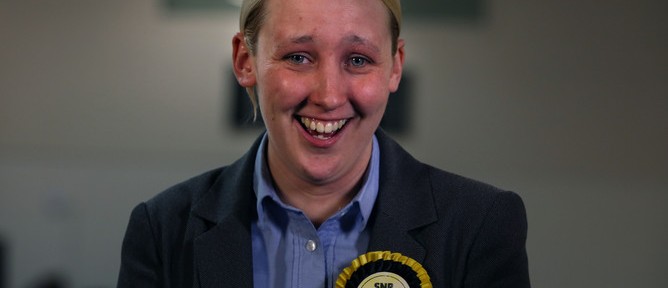
One of the key reasons for the increase in the number of women MPs is the performance of the SNP. The Scottish party came second and tied with Labour in terms of the percentage of women candidates selected (34%) and added 20 women MPs to the overall total – as well as the youngest in Mhairi Black.

Ethnic diversity

Perhaps surprisingly, given accusations of racism within the party, 6% of UKIP candidates were black or from an ethnic minority group. That’s more than the SNP, the Greens and Plaid.

The vote on May 7 saw 41 BME MPs elected to parliament, and increase on 2010 where 27 MPs were elected. MPs from non-white backgrounds make up just 6% of Parliament.

Prior to the election, it was suggested that the Conservatives had closed the gap with Labour when it came to the proportion of black and ethnic minority candidates in the running. Our data show that the Tories led the way with 10% of BME candidates selected to stand in 2010, compared to 8% for Labour and LibDems.

But this is not the success it seems when you look at winnable seats. While 13% of Labour’s black and ethnic minority candidates were placed in winnable or marginal seats, just 5% of those standing for the Conservatives found themselves in similar positions. Labour had 16 black and ethnic minority MPs in 2010 so the increase to 23 in 2015, despite poor polling, shows the importance of where candidates are placed.

The Tories were able to boost BME representation by selecting candidates in very safe retirement seats, including Rishi Sunak in Richmond, Yorkshire – a 44% Tory majority seat – and Suella Fernandes in Fareham, a seat with a 31% majority. The Tories now have 17 black and minority MPs – an increase of six from 2010.

True representation?

The increased diversity in Westminster after the 2015 election is a success worth celebrating, but we should be careful not to lose sight of the big picture. Paxman’s general premise – that there isn’t a great deal of diversity amongst the candidates of the different parties – still holds.

Women MPs make up just 29% of the new parliament, that’s less than a third for a country where women make up 51% of the population. It also puts Britain behind many of its European counterparts (Germany, France, Sweden), and well behind countries like Rwanda, Cuba and Kazakhstan. And black and ethnic minority MPs make up just 6% of parliament, despite representing 13% of the population.

To put the progress made in perspective, the UK would need to elect 130 more women and double the current number of black and ethnic minority MPs to make its parliament descriptively representative of the population it serves – and the political parties are still not offering enough candidates from these groups in the right places to make that happen.

Chrysa Lamprinakou, Marco Morucci, Sally Symington, Sam Sharp and David Ireland also contributed to this article.

FInd out more

The United Nations: Is Language Just Part of the Plumbing?

This post was contributed by Dr Lisa J. McEntee-Atalianis, of Birkbeck’s Department of Applied Linguistics and Communication

Dr Lisa McEntee-AtalianisSince the first General Assembly Resolution 2 (I) in 1946, the United Nations (UN) has championed multilingualism and cultural diversity through the promotion and support of six official languages and a varied number of working languages for its work within its Headquarters in New York, its various agencies and in its outreach and fieldwork.

In its most recent resolution the UN reiterates its commitment to multilingualism, noting that the General Assembly:

‘Recogniz[es] that the United Nations pursues multilingualism as a means of promoting, protecting and preserving diversity of languages and cultures globally, Recogniz[es] also that genuine multilingualism promotes unity in diversity and international understanding, and recognizing the importance of the capacity to communicate to the peoples of the world in their own languages, including in formats accessible to persons with disabilities, [and] stress[es] the need for strict observance of the resolutions and rules establishing language arrangements for the different bodies and organs of the United Nations…’ (65/311: 1)

However despite this de jure set up the de facto reality has seen a continued imbalance in the support given to these languages and in the linguistic practices of its membership, who have overwhelmingly favoured English.

Attempts have been made at Headquarters to redress this imbalance through rigorous inspections of the status of multilingual implementation across the system and via internal processes of review and reform across its organisations; the most recent precipitated by an inspection in 2011.

The UN has been vociferous in its continued support of multilingual provision citing its commitment to cultural and linguistic diversity. However increasing financial and administrative burdens, global challenges and realities have led to the emergence of regulations, recommendations and practices that run counter to this ideal. Moreover some argue that its language policy is somewhat ‘outdated’ and discriminatory given that a number of official languages spoken by Member States who joined subsequent to the initial policy formation fail to be recognised, forcing diplomats into negotiating positions in which they may not have the linguistic ‘upper hand’.

In a forthcoming publication (McEntee-Atalianis, in print) I detail the contemporary concerns of the UN with respect to their language policy and provision and relay findings from recent ethnographic and desk work carried out within the organisation.

The current system needs to be revised in order to foster a variety of language regimes across the ecology of the organisation. I presented these recommendations, with a specific focus on the role of member ‘agency’ in language policy formation for international organisations, at the recent ‘Symposium on Language and Exclusion’ hosted by the ‘Study Group on Language and the UN’ in New York last week, along with a number of other contributions from international scholars and UN language personnel who explored the role of language in the various activities of the UN (e.g. in international peacekeeping).

Contributors to the symposium discussed whether language has indeed just become ‘part of the plumbing’ within the organisation – a taken-for-granted resource used mechanistically – without regard for its power to include or exclude stakeholders, members and individuals in the field.

The overwhelming conclusion was that whilst the organisation has made some strides since its last inspection report (as detailed in A/69/282), it still has a long way to go to reform its current policy and practices to ensure it meets its goal of linguistic equity.

Like many organisations however the UN is difficult to penetrate. It has an established ‘Outreach’ programme and has Memoranda of Understanding with a number of academic institutions (in Africa, Asia, Europe and the Americas) but these MoUs are predominantly established to train language personnel in order to subsequently service the organisation in its official and working languages. Recommendations were made for the UN to extend its mandate in order to work with academics to support internal and external operations and nurture linguistic regimes suitable for contemporary international/transnational demands.

It is time to extend the plumbing metaphor, to envisage and prioritise language as THE vital resource fundamental to the functioning of the system, not just a necessary installation.

  • McEntee-Atalianis, L.J. (in print) ‘Multilingualism and the Unitied Nations: Diplomatic Baggage or Passport to Success?’ In Ulrike Jessner & Claire Kramsch (Eds.) Multilingualism: The Challenges. Trends in Applied Linguistics. Berlin: Mouton de Gruyter.

Find out more