Category Archives: Humanities and Social Sciences

Discover our Research: Meet the academics

As part of Birkbeck’s Discover our research activity, Professor Anthony Bale of the Department of English and Humanities writes about his current research activity.

Prof Anthony Bale

Prof Anthony Bale

What is your current topic of research?

Holy mountains and emotions in the medieval Holy Land.

What inspired you to research this?

I realised that, in their accounts of their travels in the Holy Land, medieval pilgrims often described feeling strong emotions on top of mountains. This led me to think about the relationship between emotions and landscape. This helps me retrieve a sense of how people felt during their pilgrimages, rather than focussing simply on what they did. It also helps me revise the dominant – and incorrect – modern understanding that people in the Middle Ages had no or little appreciation of the landscape.

What excited you about this area of investgation?

I’m very excited about this topic – it is completely unexplored in previous scholarship, and it allows me to revise lots of misunderstandings about the Middle Ages. Essentially, I am able to show how several things which are thought of as quintessentially ‘modern’ – such as the vista, the appreciation of the landscape, the cultivation of specific emotions – were features of the medieval journey to Jerusalem.

What’s challenging about this topic?

The research is challenging on several levels. The historian of emotions is working with partial sources that describe feelings in terms very different from today’s. It’s important not to read our own emotional vocabulary back into the medieval sources: for instance, many sources say that pilgrims felt “joy” at the top of a mountain, but this is not the same as “happiness” or “the sublime”. Rather, medieval “joy” has a complex and clear theological and philosophical set of associations. This work is also beset with difficulties due to the partial nature of the sources I’m working with and the present-day politics of the sites I’m working on.

Nabi Samwil (Palestine), known in the Middle Ages as 'Mount Joy', a hill from which pilgrims took their first view of Jerusalem (Pic courtesy of Prof Bale)

Nabi Samwil (Palestine), known in the Middle Ages as ‘Mount Joy’, a hill from which pilgrims took their first view of Jerusalem (Pic courtesy of Prof Bale)

What are the potential impacts of your research on everyday life?

My work is part of an attempt to write a richer and deeper history of the western engagement with the Holy Land in the Middle Ages. This engagement has a very long afterlife, and has coloured not only the ways in which Christians continue to engage with holy space, but also the present-day terrain of the conflict between Israel and Palestine.

What are your main goals in work?

My main goals in my work are to continue to challenge myself, extending my work in new directions, and to continue to uncover new and interesting aspects of medieval culture. Even though I’ve been studying my sources for many years, the Middle Ages definitely continue to surprise me and to engage my intellectual curiosity.

What kind of a research environment is Birkbeck to work in?

Birkbeck is a great research environment for several reasons. Researchers are able to follow the topics and sources that interest them, it’s a very accommodating and open-minded research environment. Because there is such a lively research student community too, there is always an atmosphere of exciting research being undertaken.

For a medievalist, Birkbeck has a fantastic community of people working in the premodern period, and of course we are very close to some of the best resources in the world for medieval studies: the British Library, the British Museum, the National Archives, and so on.

Find out more

Discover Our Research: Meet the academics

As part of Birkbeck’s Discover our research activity, Dr Heike Bauer of the Department of English and Humanities writes about her current research activity.

Dr Heike Bauer

Dr Heike Bauer

What is your current topic of research?

I’m working on an AHRC-funded book, The Hirschfeld Archives: Violence, Death, and Modern Queer Culture. It examines how attack and persecution shaped the development of a collective sense of same-sex identity in the first half of the twentieth-century

Why did you choose this topic?

The book addresses a gap in the scholarship: the realization that, while we know of many lives which have ended tragically as a result of legal persecution, violent attack or the inability to cope with heteronormative social and emotional pressures, we know surprisingly little about the traumatic impact of these deaths on the shaping of modern queer culture.

I have come to this realization via a chance encounter in the archive. In my previous book, English Literary Sexology, I explored the emergence a modern vocabulary of sex – words such as homosexuality and heterosexuality – and how the new ideas were transmitted from German science into English literary culture.

It was during the completion of this project that I first came across the work of Magnus Hirschfeld (1868-1935), a hugely influential Jewish doctor and reformer. He is best known today for his homosexual rights activism, foundational studies of transvestism and opening of the world’s first Institute of Sexual Sciences in Berlin in 1919. I found, however, that Hirschfeld was also a chronicler of hate and violence against people who were figured to be, in his words, ‘different from the others’ because of their gender or sexual desire.

He wrote, for instance, about the trial and death of Oscar Wilde, and how it affected the men who identified with Wilde; and he collected the first statistical figures on female and male homosexual suicide, arguing that persecution and social denial played a significant role in why (some of these) people felt their lives were unliveable. The realisation that these writings have yet to be explored was the starting point for The Hirschfeld Archives.

What excites you about this topic?

This is the first study to examine narratives about queer death, suicide and injury for the insights they provide into how such suffering was understood at the time. There is a thrill – as well as a sense of responsibility – in working with texts and images that have been overlooked or forgotten.

What is challenging about the research?

Arguing that negative experiences, as much as affirmative politics and subculture formation, shaped modern queer culture, the book addresses a critical paradox: that despite political gains and related social transformations, queer lives all too often remain precarious, subject to attack and rejection, because they do not fit real and imagined norms about what it means to live in a certain time and place, and in a body whose gender and desires challenge powerful but often difficult-to-bring-into-view social norms. The challenge in presenting this research is to make sure that it cannot be misconstrued: just because there is violence in queer history does not mean that queerness equates misery. You might be surprised about how important it is even today to be clear about this point.

What is your favourite thing about your work?

The history of sexuality is today a thriving academic field. I come to it from a feminist perspective and a background in literary and culture studies. I enjoy being able to test and develop my ideas in dialogue with colleagues from other disciplines. My most recent book, for example, a collection of essays entitled Sexology and Translation: Cultural and Scientific Encounters Across the Modern World, brings together literary scholars, historians, translation scholars and experts in gender studies who work on sexual cultures in Europe, Peru, Asia, and the Middle East. It is a real privilege to be part of such collaborations. I similarly enjoy working with my PhD students, and supporting the development of projects that can make a real intervention in existing scholarship.

What are the potential impacts of your research on everyday life?

The humanities are vital to making sense of the world, laying bare the often hidden norms that govern society, and critically and creatively expanding not only what (we think) we know, but also how we know it, and to what the effect. In terms of my own project, there are obvious benefits to developing a better understanding of LGBTIQ history. As part of the AHRC Fellowship, for instance, I discussed my research with health professionals in a workshop on violence in queer and trans lives. But as the research comes to a close, I think it’s fitting to turn around the question and also consider the impact of everyday life on my research. Discussing work-in-progress with non-academic audiences has been a vital part of the development of this project, challenging me to be clearer about the claims I made, and reminding me that the sorrows and joys of queer history are very much alive today.

Find out more

Researching reading: Behind Dickens Day 2015

This post was contributed by Dr Ben Winyard, digital publications officer at Birkbeck, University of London. Dr Winyard has been a co-organiser of Birkbeck’s Dickens Day event since 2005, and is one of the organisers behind the current Dickens reading project at the College

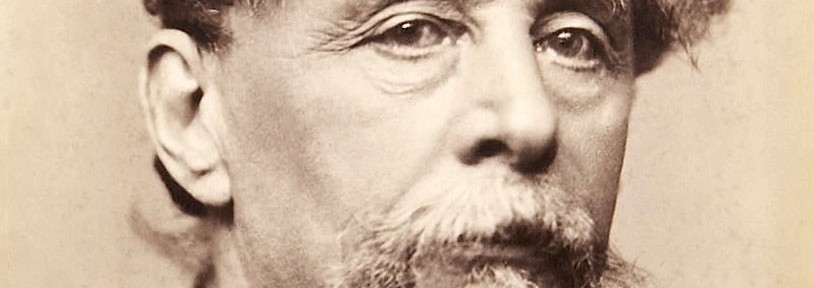
Charles Dickens

Charles Dickens

Birkbeck is a world-renowned centre for Dickens studies and, over the past 40 years, it has nurtured, trained and housed some of the most luminary Dickensian scholars.

In 1986, the preeminent Dickens scholar Michael Slater, now Emeritus Professor, established Dickens Day, a one-day event at Birkbeck to commemorate the 150th anniversary of the publication of Dickens’s first novel, The Pickwick Papers (1836). Birkbeck contained no less than four distinguished Dickensians scholars at the time – Steven Connor, Barbara Hardy, Andrew Sanders and Michael Slater – so a day to celebrate and discuss all things Dickensian was a natural proposition.

The enduring format of the Day – scholars and aficionados speaking to a general and academic audience, rounded off with dramatised readings – was established from the outset and, following the first Day’s success, an Oliver Twist day followed in 1987 with proceeding events considering each of Dickens’s novels in chronological order. After we reached The Mystery of Edwin Drood (Dickens’s last, semi-completed novel), the format shifted to a thematic one and we have since considered themes as diverse as history, popular culture, conviviality, feeling, science and adaptations of Dickens’s work.

Now in its 29th year, Dickens Day continues to attract a uniquely mixed audience of high-profile academics, researchers, students at all levels of study, members of the Dickens Fellowship, and enthusiasts and fans. The Day, which is now jointly run by Birkbeck, the University of Cardiff and the Dickens Fellowship, is well known for its convivial, welcoming atmosphere; postgraduate students and early career academics, in particular, are warmly invited to submit paper proposals.

Dickens Day 2015 — Reading

This year’s event will look at reading and readers in Dickens’s work, a fruitful subject considering how often the act of reading, and its associated objects – books, newspapers, diaries, and all manner of printed material, from wills to adverts, playbills to tailors’ bills – occur in Dickens’s novels.

Reading is a powerful, transformative experience in Dickens – for good and bad. We might consider, for example, David Copperfield’s lonely devouring of the eighteenth-century epistolary and picaresque novels of Fielding, Smollett and Stern. David says of his childhood that ‘reading was my only and my constant comfort’, a source of emotional succour and nurturing in an emotional stultifying household, run with domineering cruelty by David’s loathsome stepfather Mr Murdstone.

For Oliver Twist, though, reading the Newgate Calendar, with its gothic, melodramatic and fantastically bloodthirsty tales of criminal violence, has disturbing physiological effects, with the pages turning red with gore and its words ringing in his ears.

There are more touching, tutelary scenes of reading, though, in Great Expectations, when Pip patiently teaches illiterate, gentle-hearted Joe to read. Other novels, such as Bleak House, are absolutely stuffed with paper and the paraphernalia of reading: think of the hoarder Krook, almost buried alive by the piles of scrap paper he obsessively collects (he isn’t killed by his tottering piles of paper, but instead spontaneously combusts); or the law-stationery shop of Mr Snagsby; or the endless bundles of papers relating to the interminable case of Jarndyce versus Jarndyce. More humorously, we might consider Mr Pickwick’s innocent request to his landlady, Mrs Bardell, for ‘Chops and Tomata sauce’ for dinner, which is deliberately misread as risqué and salacious during his trial for breach of promise to marry her.

Our Mutual Friend — Reading project

BookReading Dickens also had a profound effect on his readers and the theme for this year’s Dickens Day was chosen because it dovetails with a reading experiment at Birkbeck, which has been following Our Mutual Friend (1864–65) in its original monthly parts from April 2014 to November 2015.

Our Mutual Friend also contains fascinating scenes of reading: we might think of the bitter, mercenary Silas Wegg, posing as a man of letters and reading Gibbon’s Decline and Fall aloud to the kind-hearted, illiterate Noddy Boffin, who wishes to improve himself after coming into fortunate possession of the lucrative dust heaps at the heart of the novel’s symbolic economy; or Bella Wilfer, newly married, perplexedly pouring over manuals of domestic management and cookery.

Each month, we read a digital scan of the original monthly part, while an accompanying WordPress blog features a guest post and acts as a virtual reading group for any readers to contribute to. All of Dickens’s novels were serialised and his readers encountered his work in a variety of formats. Our Mutual Friend was published in nineteen monthly parts of thirty-two pages, each costing one shilling, and featuring two illustrations by Marcus Stone and, astonishingly, over seventy pages of advertisements.

Multimedia Dickens

Dickens continued to innovate and experiment in what we might call multimedia publishing, issuing his novels within the pages of journals, in weekly and monthly parts, and in single volume form. As Dickens’s novels are increasing made available online in their original formats, digitalisation constitutes another multimedia mode of disseminating Dickens to a mass audience, to accompany the Victorian formats and the cinematic, televisual, and radio adaptations of the twentieth and twenty-first centuries.

Dickens’s readers have always consumed his work in a variety of media formats, with new technologies of reproduction, circulation and broadcasting disseminating Dickens’s stories to new readers.

We also know that Dickens enjoyed, and worked hard to deepen and cultivate, a special, intense, and transformative relationship with his readers. Consider, for example, his famous public readings, which he partly undertook for financial reasons, but also to strengthen the close bond he felt with his readers.

For Dickens, fiction enacted the radical potential of imaginative work to create sympathy and build and strengthen the emotional and social bonds that bind together disparate peoples. Events such as Dickens Day, and projects such as the Our Mutual Friend reading experiment, testify to the continued ability of Dickens’s novels to bring people together and forge communities.

Find out more

Research round-up: A snapshot around campus

This post was contributed by Andrew Youngson, media and publicity officer at Birkbeck, University of London

This summer, to celebrate Birkbeck’s standing as a world-leading, research intensive university, we have been looking back at some of the fascinating research activities carried out by top thinkers from across the College.

But it doesn’t stop there. Staff members across Birkbeck’s five schools and multiple institutes and centres are ever busy at the sharp edge of research. To give a flavour of activity currently going on, we spoke to a handful of researchers about their current research topics.

Conservation and heritage

Dr Diane HornDr Diane Horn is currently carrying out a study funded by NERC and Arup which aims to produce a ‘roadmap’ to guide practitioners through the process of analysing coastal flood risk in urban areas

What is challenging about this topic of research?

“It’s a really exciting project for me to be involved with – I’ve never done anything quite this applied. I’m working on adaptation options: once we know the extent of the flood risk that a particular city faces from sea level rise, I’m putting together guidance on what their options are, how to choose the most appropriate adaptation response, and how to implement and monitor the success of the adaptation response.


“Some cities will be able to protect against flood risk by building barriers (like the Thames Barrier) and some cities will be able to live with the flood risk through improved building codes or land use planning. The real challenge, though, is that some cities will need to make a decision to retreat from certain locations or to relocate particular assets in areas at lower risk. Identifying how this could be done, and how residents and politicians can be convinced that they need to consider retreat and relocation is proving to be the most challenging part of the research.”

Science and biomedicine

Natasa GaneaNatasa Ganea is currently conducting a study which follows the social and cognitive development of a group of sighted infants of blind parents

What kind of a research environment is Birkbeck to work in?

“Birkbeck is a vibrant research hub with curious scientists, passionate not only about their subject, but about science in general. It is not surprising that in such an environment a quick conversation over lunch break or in the evening in the Birkbeck Bar occasionally puts the basis of a new study.”

Politics, society and the law

Dr Sappho XenakisDr Sappho Xenakis’s current research project explores national and international political economies of crime and punishment, corruption, and intersections between organised crime and corruption.

Why did you choose a career in research/academia?            

“I sought a career in academia because of a desire and sense of obligation to strive to understand and engage with the complex politics of everyday life, sentiments instilled in me by my parents.”

Learning, education and development

Prof Claire Callender is currently researching prospective full time students’ attitudes towards debt.

Prof Claire CallenderWhat misconceptions are there around your discipline or area of research?

“Does fear of debt deter students from higher education?  With the escalating student loan debt arising from higher tuition fees in England, this is a key policy question. One might expect that there would be loads of research in England examining students’ attitudes towards debt and its effect on their higher education decisions.


“However, there are relatively few studies exploring these issues nationally among prospective students. Most existing studies on student debt are based on the views of students who are already at university. By definition, such students have largely overcome their fears of debt.


“Consequently, it is impossible to gauge from such studies if student loan debt actually deters would-be students from going to university. Our study, involving a nationally representative sample  of around 1,500 prospective students, will assess whether concerns over debt and the costs of higher education influence potential students’ decisions about entering higher education, where and what to study, and mode of study.”

Arts, history and culture

Dr Rebecca Darley’s current research title is: ‘A sign of God’s favour: Byzantine gold coins in the Indian Ocean’

Dr Rebecca DarleyWhy did you choose this topic of investigation?

Coins minted in the eastern Mediterranean between the fourth and seventh centuries A.D. and found in south India have usually been interpreted as evidence for trade. By studying the writings of Byzantine authors about these coins I am interested in re-focussing on the meaning they reflected back to their place of origin.


The relationship of the Byzantine Empire to its coinage was never purely commercial and money could often be an explicit symbol for power and virtue, as it proved when writers commented on Byzantine gold reaching India — not as a sign of economic prosperity but of divine favour and the pre-ordained superiority of Byzantine virtues over those of its neighbours.

Find out more