Training mental health professionals in China

This post was contributed by Viviane Green from Birkbeck’s Department of Psychosocial Studies. In 2014,  Viviane Green was appointed as the First High End Foreign Expert in the Field of Child and Adolescent Psychotherapy by the Chinese State Administration of Foreign Expert Affairs.

Chinese model familyMental illness is heavily stigmatized in China. Dr Zhang, a Chinese psychiatrist, has characterised his culture as ‘other-centred’, with families not wishing to burden a professional with their problems, underscored by shame and anxiety at losing face by talking about family troubles in public. Despite this, there has been a huge growth in the demand for counselling and psychotherapy. There is general acknowledgment by the Chinese child and adolescent psychiatric establishment that early intervention programmes are needed, especially for the millions of left behind children (those left with family in the countryside for long periods while parents work in the cities). In a population of 1.368 billion, there are 20 000 psychiatrists, which gives some indication of the scale of the need for training mental health professionals.

Since 2012 , in collaboration with my Chinese colleague Dr Wang Qian (Child Psychiatrist and Analyst), I have been involved in the Sino-British Psychoanalytic Psychotherapy Training Program for Children and Adolescents. This began as a one-off five-day training event and has rapidly developed into a three-year programme. It comprises two annual five-day sessions and weekly seminars over the internet with experienced UK-based child psychotherapists and psychoanalysts, in which students report on their weekly observations of a mother-infant relationship within a family setting. Three clinical groups have been established where students present anonymised clinical case studies. A specialist fortnightly seminar for developing Chinese clinical supervisors is about to be launched.

In the development of the programme many questions have had to be considered.

Is there a culture for psychotherapy in China?

The radical and rapid social change which China has experienced since the 1980s has undoubtedly created psychosocial stresses impacting on families. There has been large-scale internal migration. Social security has ended and there has been a breakdown of traditional family structures. Parents born during the one child policy (1979-2016) are now a ‘squeezed middle’, caught between ageing parents on the one hand and their child on the other. The one child policy, in the Chinese view, has created a generation of ‘little Emperors’ – children with more limited social adaptive capacities. There has been an increase in individuality, with young adults torn between conformity and autonomy. Increasing levels of anxiety among ‘anomic’ youth and overstretched parents struggling to make ends meet may have created the conditions ripe for a psychodynamic approach to flourish.

What are the challenges for the British teachers and the Chinese students?

Students are highly motivated with a traditional deep respect for teachers. They come with varying depth of understanding and experience. Sometimes a wide gap reveals itself between the ‘cognitive’ level and clinical understanding. A good deal of basic thought has to be given to how to ‘teach’ students to really listen and reflect without stepping in with ‘solutions’.

The challenge in teaching students who have long been involved in a highly competitive, structured, formal chalk/talk educational system that stresses achievement is how to foster peer group learning where peer group engagement is valued. It has meant explicitly avoiding stepping into the role of ‘expert’ and inviting participants to develop their thoughts or seek out the views of others in the group.

Is a psychodynamic approach founded on a Eurocentric model relevant to a Chinese context?

We are all aware that our model is Eurocentric and this is particularly apparent in the mother-infant observation seminars, where the observations are usually of a child growing up in a three generation household. Grandparents are omnipresent and often offer the childcare while both or one of the parents is at work. The particular dynamics between mother/father and paternal or maternal grandparents are part of the fabric for consideration. We are also aware how this affords a child an unusual degree of emotional investment.

A core question both at the level of theory as well as clinical practice is how we think about the self. Is the individuated self, where it is deemed a healthy norm to gain independence from the family of origin, one which needs recasting in the Chinese context, where instead of an ‘ego’ there is an embedded ‘wego’?

In moving between the ‘universal’ (i.e. we are all social beings with a mind and a developmental timetable which unfolds) and the ‘particular’ (the specific ways in which a culture may draw up the lines of internal conflict) we are in a process on-going learning from our students. It is in the relative safety of the smaller group clinical and mother-infant observation seminars that we get a more ‘intimate’ sense of what profoundly concerns the students and also what sparks lively debate, for example a sense that having been born a girl rather than boy can carry a sense of disappointment.

Looking to the future

The programme has clearly flourished since 2012 with the first cohort having graduated and a second cohort having completed their first year. The next steps needed to secure its future include the development of a framework for formal accreditation, identifying clinical competencies and embedding the programme in a university context, to give it greater sustainability.

Find out more

Guilt, pity and shame in humanitarian and human rights communications

This post was contributed by Dr Bruna Seu from Birkbeck’s Department of Psychosocial Studies

NGOs often use images designed to induce feelings of guilt in order to encourage donations

You have just sat down for lunch. You switch on the TV and you are confronted with the image of a malnourished child. Somebody is measuring their arm with a tape and the appeal asks you to donate £3. It’s simple: you have your lunch, they don’t. You feel guilty and you give.

This guilt-inducing formula raises much-needed revenue for NGOs and humanitarian organisations, so it is understandable why they return to it time and again. However, my research into the way the public responds to information about human rights violations and humanitarian crises suggests that using guilt as a fundraising tool is problematic.

The problem with guilt in humanitarian fundraising

The pain of guilt inspires in people a new capacity for reparation and the desire to right the wrong. While a monetary donation can momentarily alleviate the guilt inspired by humanitarian appeals, for many it does not constitute a sufficiently reparative action.

A more desirable aim than finding a way to momentarily alleviate guilt is to develop a feeling of connectedness with those suffering. Development of a meaningful understanding of the issues at play is hindered by narrow, racially-stereotyped portrayals of developing countries, which ignore the role of domestic actors in the global South and reinforce the perception that more charity is required rather than fundamental political and economic change.

A further problem is that the sheer volume of these guilt-inducing messages leads to a sense of hopelessness and helplessness that shuts down routes to improved understanding and connectedness, creating a vicious cycle where we feel guilty, donate to alleviate guilt, and then ignore the suffering other until we are bombarded by further guilt-inducing messages. This cycle leaves no room for alternative thinking that would increase awareness of development issues or behavioural engagement in the form of volunteering and campaigning.

Participants in my studies have shown awareness of guilt being part of their immediate reaction and that when ‘it wears off’, as they put it, they are left with nothing to hang onto. So we have a self-perpetuating cycle whereby people donate partly because they  feel pity, compassion, guilt and they want to help; partly because they don’t know what else to do; and partly, as a consequence of these two. Donating is a way of ‘switching off with a clear conscience’.

Shame vs guilt

My research is now beginning to consider the experience of shame as opposed to guilt, and whether this would lead to more meaningful engagement in the issues. There are many potential problems to invoking feelings of shame. However, while guilt is related to an action – something we did or didn’t do, shame is about the whole of ourselves. Yet, precisely because it is personal, rather than relating to a bad action, it rests on relationality – what needs repairing is the link with the other. Let’s say if guilt messages are of the kind ‘skip lunch – save a child’ and a child dies because you did not skip lunch, of course you give – you ‘did the right thing’. But what if messages prompted reactions such as: ‘I don’t want to be the kind of person who is informed of such horrors and doesn’t do anything.’?

Contrary to guilt, regulated by the world of norms and laws which is the territory of the superego – the self I ought to be, the referent in shame is the ego ideal – the self I wish I could be. It might seem a small difference, but one that shifts the terrain from the transactional to the relational. I am no longer saving the other, but on the contrary it is with the other that I can be saved. When the bond between self and other is intact we feel pride and harmony. Maybe such a relational mode could return dignity and power to the other and make us agents not of hand downs but of our own betterment as human beings.

This article is based on a talk that Dr Seu gave recently at the Dartington Centre for Social Research

Find out more:

Rio 2016: Predicting Success

This post was contributed by James Fisk, graduate administrator at the School of Business, Economics and Informatics. This article relates to new a new study by Professor Klaus Nielsen, of Birkbeck’s Sport Business Centre and Department of Management. Prof Nielsen’s study uses novel measures to predict countries’ success in the approaching Rio 2016 Summer Olympic Games.

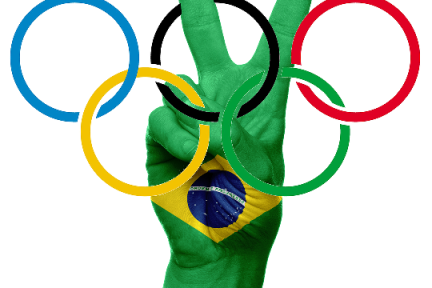
A hand with the Brazilian logo and the five Olympic ringsWith the opening ceremony of the 2016 Olympic games due to take place in a few days (6th August, to be precise) athletes throughout the world will be making their final preparations for the biggest sporting event of their lives.  It won’t just be anxious athletes arriving in Rio de Janeiro this week; the international press, hopeful fans and governments will all be alighting for the competition, whose roots famously stretch back to antiquity. The Olympic Games appear as a focal point not just for athletes, but also for governments throughout the world, for whom huge investments have been made in the pursuit of the coveted Gold medals. So, who will come out on top? Fortunately for us, Birkbeck’s Dr Klaus Nielsen, Professor of Institutional Economics, has written a paper that should give us a good idea. Using a combination of results from recent world championships in Olympic sport disciplines, world rankings, taking into account banned or absent athletes and historical comparisons, Dr Nielsen has predicted the winners and losers of the forthcoming tournament.

The Top Three

The top three may not come as a huge surprise to many, they are: the United States of America, China and Russia.  However, it’s not all static at the top, as Dr Nielsen’s paper predicts the overall medal share for the three giants to reduce from 30% in 2012, down to 25% for 2016. A reduced share of the medals for Russia are a direct consequence of many of its athletes being banned or suspended, particularly in disciplines for which Russia has traditionally been dominant, such as weightlifting. The USA, meanwhile, face reductions in their predicted tally following a disappointing showing from their Track and Field team at last year’s world championships, although overall, the USA is still predicted to come out on top.  China are also set to see their tally drop from 2012, from 88 medals to 83, with Dr Nielsen citing a lack of diversification in the sports they actively compete in. So, with the big three seeing a 5% drop in success shared among them, where will the extra medals go?

Great Britain

Four years after successfully hosting the tournament, in which they won 65 medals, Great Britain return with momentum. Although funding has not dropped below the level it received in the build up to London 2012, the ambitious previous target of becoming the first nation to win more medals in the tournament immediately after hosting, has recently been replaced with a more modest one of winning at least 48 medals – which is more than its hitherto most successful overseas Games in Beijing 2008. Professor Nielsen believes that this target will be achieved in Rio. Recent performances at world championships suggest that a figure of 51 medals is likely. Great Britain is predicted to end up as the fourth best nation so although the top three look set for diminished returns, Great Britain are not poised to use this to their advantage and interfere with the dominant triumvirate.

The beautiful coastline of Rio de Janeiro

Movers and Shakers

Rio looks set to witness changes to the top 10 medal-winning countries. Italy look set to drop out of the top 10 and Brazil, the Netherlands and, rather surprisingly, New Zealand will be vying to shoot up the table.  New Zealand will be hoping to use a phenomenally successful London 2012 showing (where they won 13 medals) as a platform for increasing their share of medals to 20. Although investment plays a significant role in this upward trajectory, Dr Nielsen highlights their dominance in 3 of the 4 new events due to debut at the Olympics. Rugby 7’s, as well male and female Golf, will see New Zealand continue their ascendancy into the higher echelons of sporting achievement.

Whilst the Olympics has always cherished its surprises, such as Abebe Bikele  in 1960 or Billy Mills in 1964, Dr Nielsen’s work should put some anxious minds to rest, whilst others – such as Russia and Italy –  will perhaps be hoping for more Olympian surprises.

Read Professor Klaus Nielsen’s study: “Medal predictions for the Rio Games – the competition between national elite sport systems

Find out more

Discover our Research: Meet the academics

As part of Birkbeck’s Discover our research activity, Dr Suzannah Biernoff, senior Lecturer in Modern and Contemporary Visual Culture in the Department of History of Art writes about her current research activity.

Dr Suzannah Biernoff

Dr Suzannah Biernoff

Hi Suzannah. What was your route to Birkbeck?

I moved to London from Sydney in 1998, after finishing my PhD. Before taking up a lectureship at Birkbeck in 2007 I taught on the Visual Culture programme at Middlesex University and at Chelsea College of Art and Design.

What’s your current topic of research?

My most recent publications have examined attitudes towards disability and disfigurement during and after the First World War. My book, Portraits of Violence: War and the Aesthetics of Disfigurement, is due out with the University of Michigan Press early next year. Wellcome funding has made it possible to publish open access articles in journals including Social History of Medicine, Visual Culture in Britain and Photographies.

I wanted to use visual sources as much as possible – from medical photographs and life drawings to prosthetic masks, photo albums and images in the illustrated press – sources that complicate and at times contradict the written record. As a historian of visual culture I am also interested in how people viewed the disfigured face. Cultural prohibitions against staring, expressions of pity or disgust, and later in the century the visual thrill of the horror movie: all of these ‘ways of seeing’ are part of the story, as much as the material evidence of injury, masking and repair.

I have recently been awarded a Birkbeck Wellcome Trust ISSF mid-career fellowship to begin a new project on images of facial difference within European and North American popular culture, film and visual art in the 20th and 21st centuries. I am interested in how people have responded to unusual or extraordinary faces; the cultural mechanisms of normalisation; and strategies of defiance and re-interpretation (for example, where the damaged face is re-imagined as beautiful, or where artists use disfigurement as a creative or symbolic device). As well as artistic representations of the face, my sources include public health images, advertisements, medical photographs, coffee table books, film and fashion photography.

Why did you choose this topic? What inspired you?

In autumn 2002 I went to the Strang Print Room at UCL to see a small exhibition of Henry Tonks’ drawings of WWI servicemen with facial injuries. In western art, the face is a primary marker of identity and humanity, and its violation or absence often represents the limits of the human. Tonks’ portraits are almost unbearably intimate studies. They record men before and after reconstructive surgery: almost certainly in pain, physically and emotionally exposed, but stoical. A surgeon himself, as well as a professor of anatomy and drawing at the Slade School of Art, Tonks managed to reveal something new about the depths of the human face and the ways in which images – and institutions – can shape the way we see. He once wrote that he wondered what the body must look like to someone without his knowledge of anatomy. I wonder if his ability to look without horror or embarrassment at the men he drew allows us to see them differently as well.

What excites you about this topic?

I’ve always liked the idea that the things we take most for granted, the things that feel inevitable and personal – our bodies, emotions or sensations – have a history. My current project focuses on the human face, which has tended to be overlooked in histories of the body.

Each chapter of Portraits of Violence revolves around a particular image or set of images:

  • Nina Berman’s 2006 World Press Photo winning portrait Marine Wedding is discussed alongside Stuart Griffiths’ photographs of British veterans of the Iraq War;
  • Henry Tonks’ drawings of WWI facial casualties are compared to the medical photographs of the same men in the Gillies Archives; the production of portrait masks for the severely disfigured is approached through the lens of documentary film and photography;
  • and in the final chapter the haunting image of one of Tonks’ patients at the Queen’s Hospital reappears in the first-person shooter game BioShock, provoking an exchange on a players’ discussion forum about the ethical limits of realism.

What is challenging about the research?

Photograph of Henry Tonks in his room at the Queen's Hospital, Sidcup, 1917

Photograph of Henry Tonks in his room at the Queen’s Hospital, Sidcup, 1917

Like most researchers working on issues of stigma and appearance within the humanities, my approach is informed by a social model of disability, according to which beauty, normality, acceptability and ugliness are in the eye (and cultural imagination) of the beholder. One of the strange things about disfigurement as a topic is that people (both experts and popular writers) have tended to assume that the object of study is self-evident. We think we know what we’re talking about when we refer to disfigurement. In fact there are no sources – historical or contemporary – that define this problematic term. The sociologist Heather Laine Talley observes in her book Disfigurement and the Politics of Appearance that the concept of disfigurement has ‘no static intelligibility, no objective point of reference, no stable shared meaning’ (2014, p. 14).

This problem with definitions presents a challenge for historians. If we understand ‘disfigurement’ – and stigma generally – as negotiated and context specific, then the idea of a history of disfigurement is a bit misleading. Really, one would need to ask why and how facial or bodily difference becomes disfigurement within particular social interactions and cultural contexts. In the early twentieth century – the period I’ve looked most closely at – these contexts include the fear and censorship of facial war injuries, and the lingering stigma of syphilis, but the symbiotic relationship between war and medicine had a role to play as well. Thanks to the large number of facial casualties returning home from the battlefields of WWI, plastic surgery – described by the pioneering surgeon Harold Gilles as a ‘strange new art’ – became a recognized medical specialism, and disfigurement a treatable condition.

What are the potential impacts of your research on everyday life?

Appearance plays a crucial role within social hierarchies. Like gender, class and race, the way we look is a powerful determinant of social mobility and physical capital. In this respect, there are clear parallels between the civil rights and feminist movements, and more recent developments in disability rights and ‘face equality’.

Despite the inclusion of serious disfigurement in the Disability Discrimination Act (DDA) in 1995, there is a widespread perception among disability scholars and campaigners that the norms of acceptability are becoming narrower: that society (at least in the developed and increasingly globalised world) is becoming less tolerant of people who look different from a prevailing idea of normality.

Although disfigurement is not an illness – or even, in most cases, a functional impairment – it is widely perceived as having and requiring a medical solution. Understanding the social, political and historical contexts of ‘disfigurement’ is important both from the perspective of the medical humanities, and for scholars, artists, activists and policy makers working in the field of disability studies and advocacy.

What kind of a research environment is Birkbeck to work in?

One of the things I love about working at Birkbeck is that I teach students with such diverse interests and backgrounds. Each year I run an MA option called Exhibiting the Body, on medical museums and the historical intersections between art and medicine. Over the years my students have included nurses, GPs, painters and performance artists, a game developer, a medical photographer, and the curator of Barts Pathology Museum. There have been some memorable debates along the way on topics ranging from 19th-century freak shows to the ethics of displaying human remains.

As a teacher, being able to draw on a wide spectrum of personal and professional perspectives makes for an incredibly rich classroom experience. In the humanities we talk a lot about the value of interdisciplinarity at the level of research, but often overlook the benefits of teaching students in a multidisciplinary environment.

Find out more